Food security belongs at the center of how we plan for southeastern Fairfax County’s future.
Families need dependable access to nutritious food to pursue education, maintain employment, and build financial stability. Our response to hunger should make those goals more attainable.
Capital Area Food Bank’s 2026 Hunger Report offers a warning: economic pressures are leaving too many households without a reliable grocery budget. For communities along Richmond Highway, the findings call for sustained investment in both food assistance and the services that help families regain stability.
What the report tells us
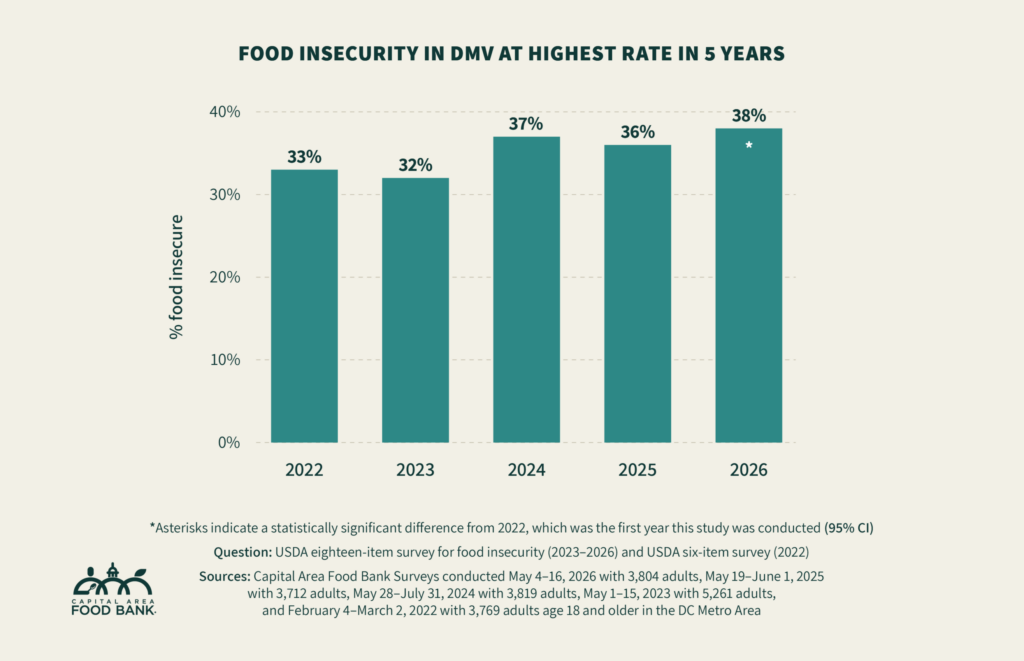
The report found that 38% of DMV households experienced food insecurity in the past year, a five-year high. Approximately 34% of children experienced food insecurity.
Financial strain is widening: 44% of households said their finances worsened over the previous year. The report identifies job losses, prices outpacing earnings, and the fall 2025 federal shutdown as major pressures. Lower-income households and households of color face disproportionate hardship.
Meanwhile, 28% of residents reported using charitable food assistance. The report warns that changes to public benefits, pressure on nonprofits, and immigrant families’ concerns about seeking services could deepen need. It calls for coordinated support, stronger economic mobility pathways, and expanded nutrition and healthcare partnerships.
What this means along Richmond Highway
These regional findings are especially concerning along the Route 1 corridor—the community United Community serves—where approximately 18,600 people experience food insecurity and 2,500 are unemployed. Within this area, 86% of our clients live in two of Fairfax County’s communities with the highest poverty rates.
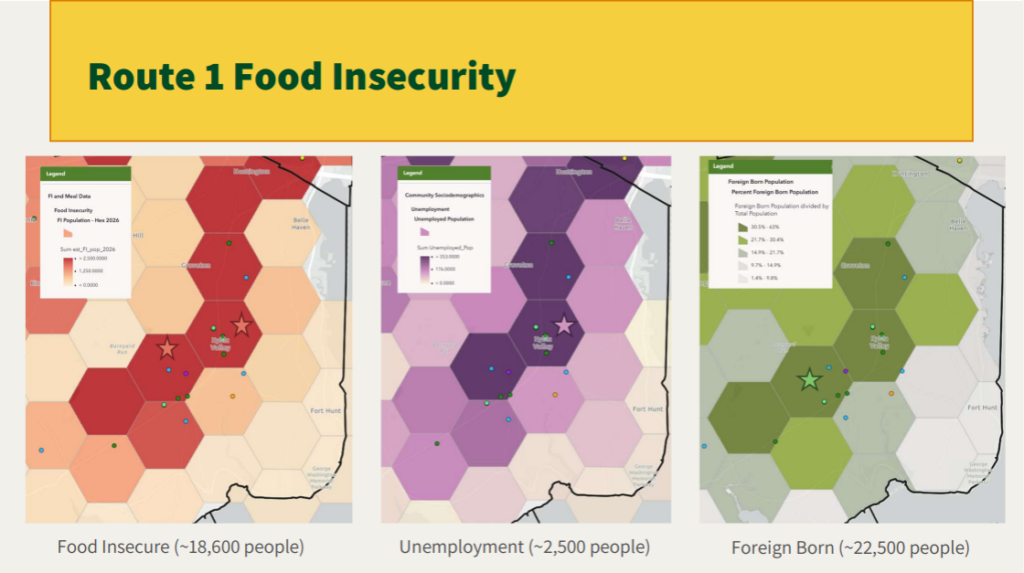
The corridor is also home to approximately 22,500 foreign-born residents. While their experiences vary, those with limited English proficiency may face additional barriers to finding work, as the county’s needs assessment documents. For households already stretched thin, rising costs or reduced work hours can quickly force difficult choices between groceries, rent, and transportation.
Changes to public benefits are adding pressure at a time when many households have little left to cut. The Capital Area Food Bank’s report explains that tighter SNAP eligibility rules and expanded work-reporting requirements could leave more families without food assistance. Confusion about the changes may also prevent eligible residents from applying or renewing their benefits. Meanwhile, changes to Medicaid could leave some households facing additional medical expenses, stretching their grocery budgets even further.
As these pressures build, more families are expected to turn to food pantries like United Community’s. Survey respondents said they would seek charitable food assistance if they lost part of their SNAP benefits. Yet food pantries are facing their own funding and operating challenges. Meeting greater demand requires more food, volunteers, and financial support—and charitable food assistance cannot fully replace the benefits families stand to lose.
United Community’s Role in a Stronger Local Safety Net
Meeting the growing need for food assistance in southeastern Fairfax County requires a coordinated response. Families need groceries today, along with support to address the challenges that keep their budgets stretched thin. United Community brings these needs together through food assistance, family support, education, and workforce development.
Our Cynthia Hull Food Pantry provides nutritious, culturally familiar food, while home bound delivery and school-based distributions extend access to neighbors who may have difficulty visiting the pantry. The Family Achievement Program offers individualized coaching and support, Progreso provides English learning and citizenship resources, and our Early Learning Center supports young children and their families.
These connections mean a request for groceries can open a conversation about what else would help a household move forward. A parent may need childcare to pursue work. An adult learner may need food assistance to remain focused on classes. Helping families connect with support makes each service more effective.
Schools, employers, public agencies, and community organizations all have a role in this effort. Together, we can make food access a routine part of workforce, education, and family support planning—and help families complete referrals rather than leaving them to navigate services alone.
Support must also be accessible. Distribution hours should work for employed parents, information should be available in the languages families use, and delivery options should reach seniors and adults with limited mobility. As benefit rules change, clear guidance about eligibility and documentation can help neighbors maintain the assistance they qualify for.
Sustaining this response requires dependable funding. Businesses and donors can support food purchases as well as the delivery, storage, staffing, and outreach that make distribution possible. Multi-year commitments help organizations plan for growing demand. Public leaders can protect access to nutrition assistance and fund local efforts to help eligible residents navigate it.
For United Community, the priority is to make these connections stronger and easier to access.With sustained investment and committed partners, we can help families along Richmond Highway meet immediate needs while building greater stability.